The short version
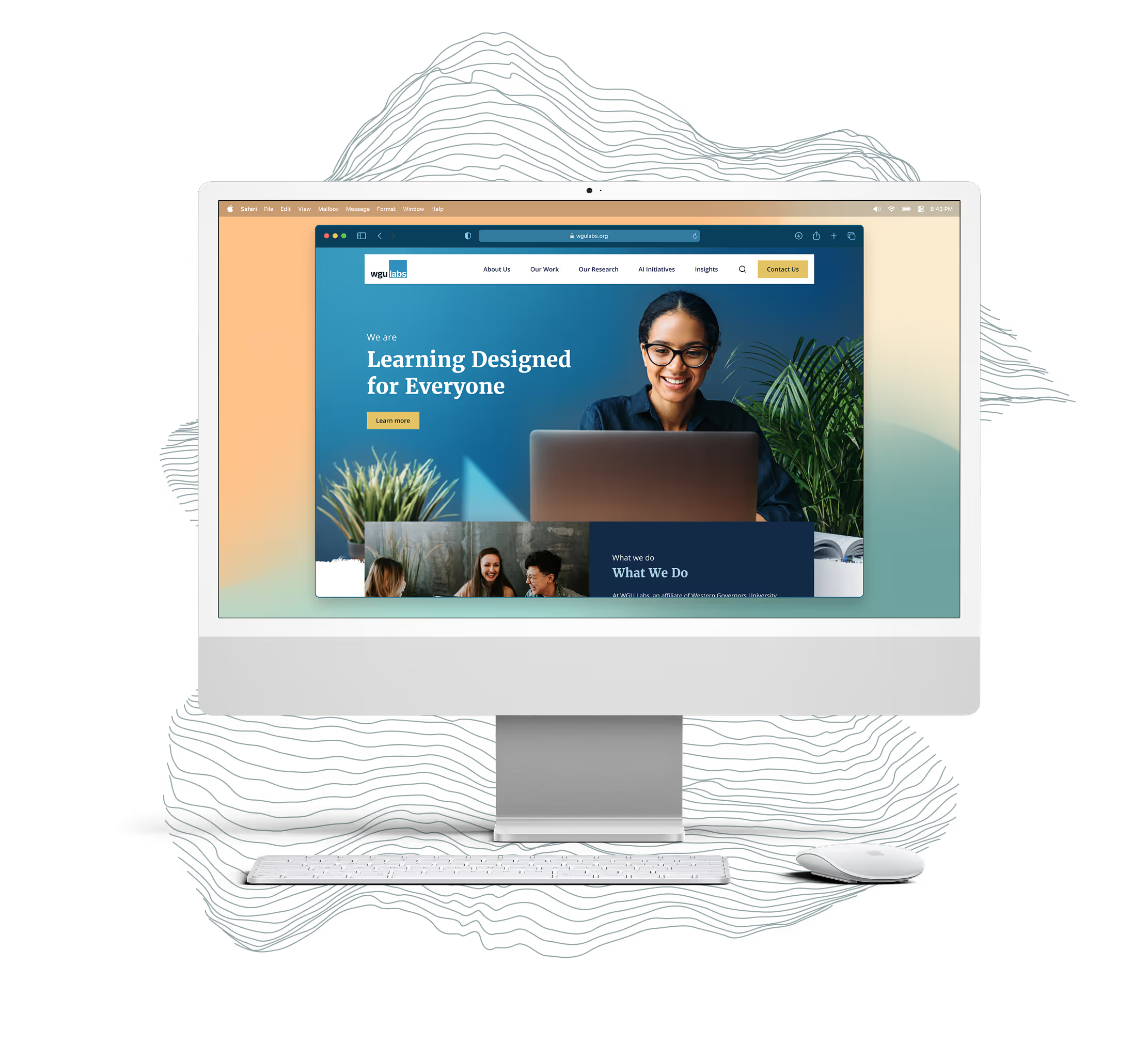
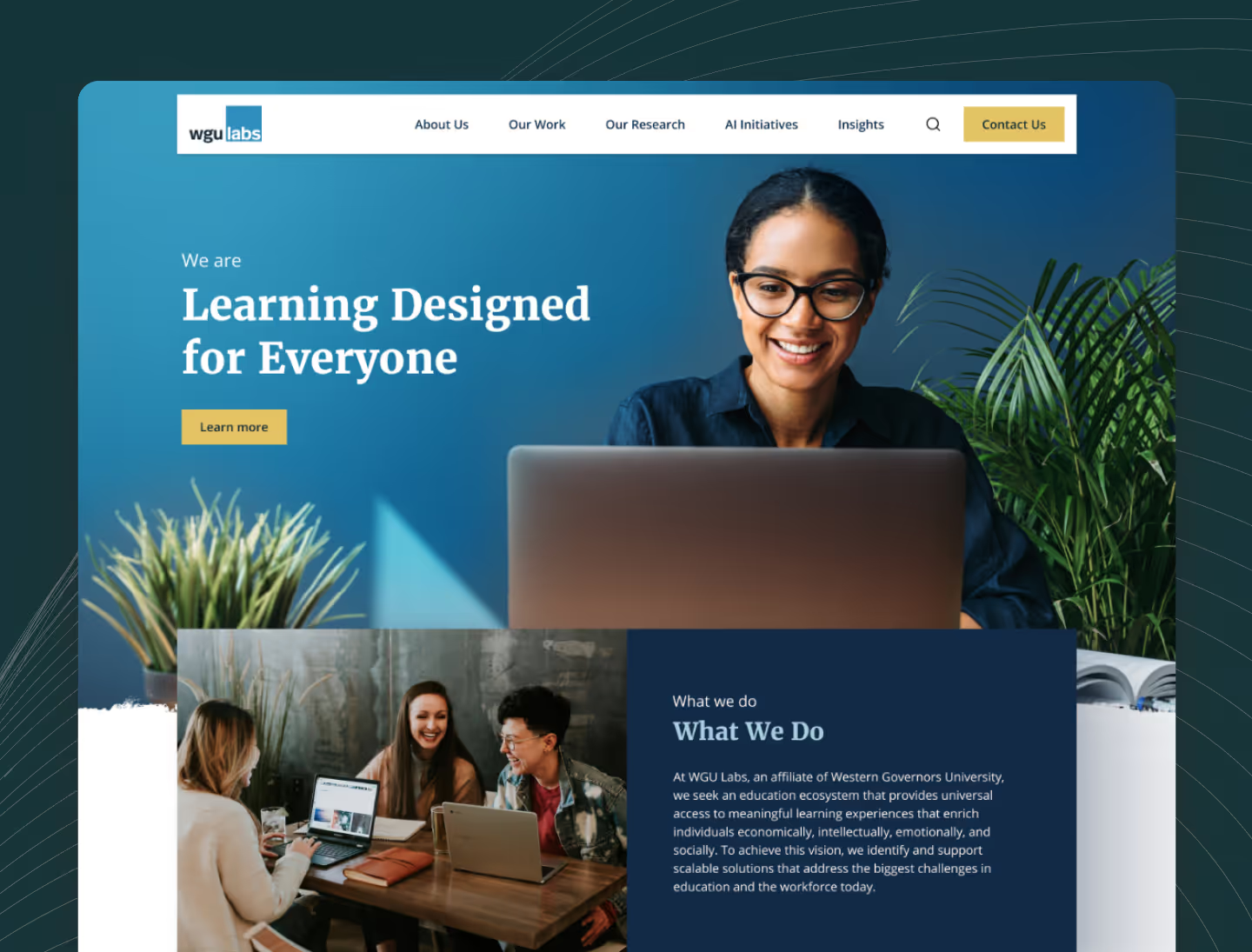
WGU Labs is the innovation arm of Western Governors University, which has more than 200,000 current students and 445,000 graduates. HQ worked with WGU Labs from product strategy and UX through development to redesign the full WGU Labs website. The homepage opens with the mission line “Learning designed for everyone” and follows it with impact numbers, and the portfolio pages explain what each of the 28 EdTech companies backed by WGU Labs does. HQ built a design system for the site and taught the WGU Labs marketing team Webflow, so the team now publishes its own research briefs and white papers without waiting on HQ. WGU Labs has worked with HQ since 2022, and in 2025 HQ applied the team’s updated brand guide across the site. That same year, WGU Labs published 21 research reports through the pages HQ built.
The problem
Western Governors University is one of the largest universities in the United States, over 200,000 current students, 445,000+ graduates, and a fully online model built for working adults. WGU Labs is the innovation arm: a portfolio of 28 EdTech companies, an accelerator, and a research network called the College Innovation Network (CIN) that supports over 180,000 students across its members.
The challenge wasn’t a shortage of meaningful work. It was communicating the scope and mission of an organization that operates at multiple levels simultaneously, funder, researcher, accelerator, and advocate, to audiences ranging from potential portfolio companies to university partners to students.
What did HQ build?
HQ partnered with WGU Labs on product strategy, UX, and development to redesign their full web presence. The result needed to do three things: lead with mission, surface impact clearly, and give portfolio companies and CIN members a place in the story.

The homepage opens with “Learning designed for everyone,” the phrase that anchors the WGU Labs mission, and immediately follows with concrete impact numbers. The design is warm and inclusive by intention: WGU Labs’s work reaches students who have historically been underserved by traditional higher education, and the site needed to reflect that.

The portfolio and partner sections surface the 28 accelerator clients and CIN members with enough context to be meaningful, not just logos, but what each organization does and where WGU Labs’s investment has gone.
Communicating impact at scale

The impact section leads with statistics, accelerator clients, CIN members, students supported, and backs them with active case study content. Visitors who want to understand what WGU Labs actually does can see specific examples, not just aggregate numbers.

The design system we built gives the WGU Labs team the components to add new portfolio companies, update case studies, and surface new research without needing a developer for every change.
Four years in, and a second identity
The redesign was the start of it. WGU Labs has stayed with us since 2022, and in 2025 their team brought us an updated brand guide and we worked a second identity through the site.
That round ran with their designer in the Figma file alongside ours. Nav styles and button shapes got argued out together, in the file.
We also sat down with their marketing team and taught them Webflow. They publish their own research briefs and white papers now, and a new product page does not wait on a ticket reaching us.
What does the site publish now?
WGU Labs runs its own numbers through the pages we built. In 2025 that was 21 research reports and four AI interventions in development, alongside a standing student panel their research draws on. The College Innovation Network brought 15 member institutions together.