


The short version
For Legacy.com, the world’s largest network of obituaries, HQ designed and built a white-label flower and gift marketplace in partnership with Tukios. A guest who opens an obituary on Legacy.com lands in a storefront branded for that funeral home and stocked by local florists and vendors near the service. Funeral homes and vendors manage orders and track deliveries from an admin panel HQ also built. The marketplace launched in December 2020. By September 2022 it served more than 1,200 funeral homes and 1,300 local vendors, and in August 2022 it passed $1 million in monthly revenue for the first time. In July 2026, $2 million in monthly revenue ran through the platform, double that first million-dollar month. HQ has kept developing the marketplace for five years, across 13,337 commits and eight major releases, and Legacy still runs it today.
The problem
Legacy.com reaches 28.9 million monthly visitors and hosts obituaries for over 70% of deaths in the United States. For years, guests who wanted to send flowers to a funeral service were routed through national delivery partnerships, which meant generic arrangements, no local flavor, and margin leaving the community.
Legacy.com and their funeral home partners wanted to fix that. The idea was to let local florists and vendors fulfill orders directly through the funeral home, keeping dollars local and giving families a more personal experience. But funeral homes aren’t logistics companies. They didn’t have the tools to coordinate orders, manage vendor relationships, or track fulfillment at scale.
Founded in 1998, Legacy.com is the world’s largest network of obituaries and memorial tributes.
With thousands of newspaper and funeral partners, Legacy.com products reach millions daily.
What did HQ build?
HQ partnered with Legacy.com and Tukios, who brought deep funeral industry relationships, to build a white-label marketplace platform from the ground up.
When a family member visits an obituary on Legacy.com, they’re directed to a branded marketplace that looks and feels like the funeral home itself. The product catalog is curated from local vendors, florists, gift shops, makers of memorial keepsakes, rather than national chains. Guests browse and buy without ever realizing there’s a third-party platform underneath.
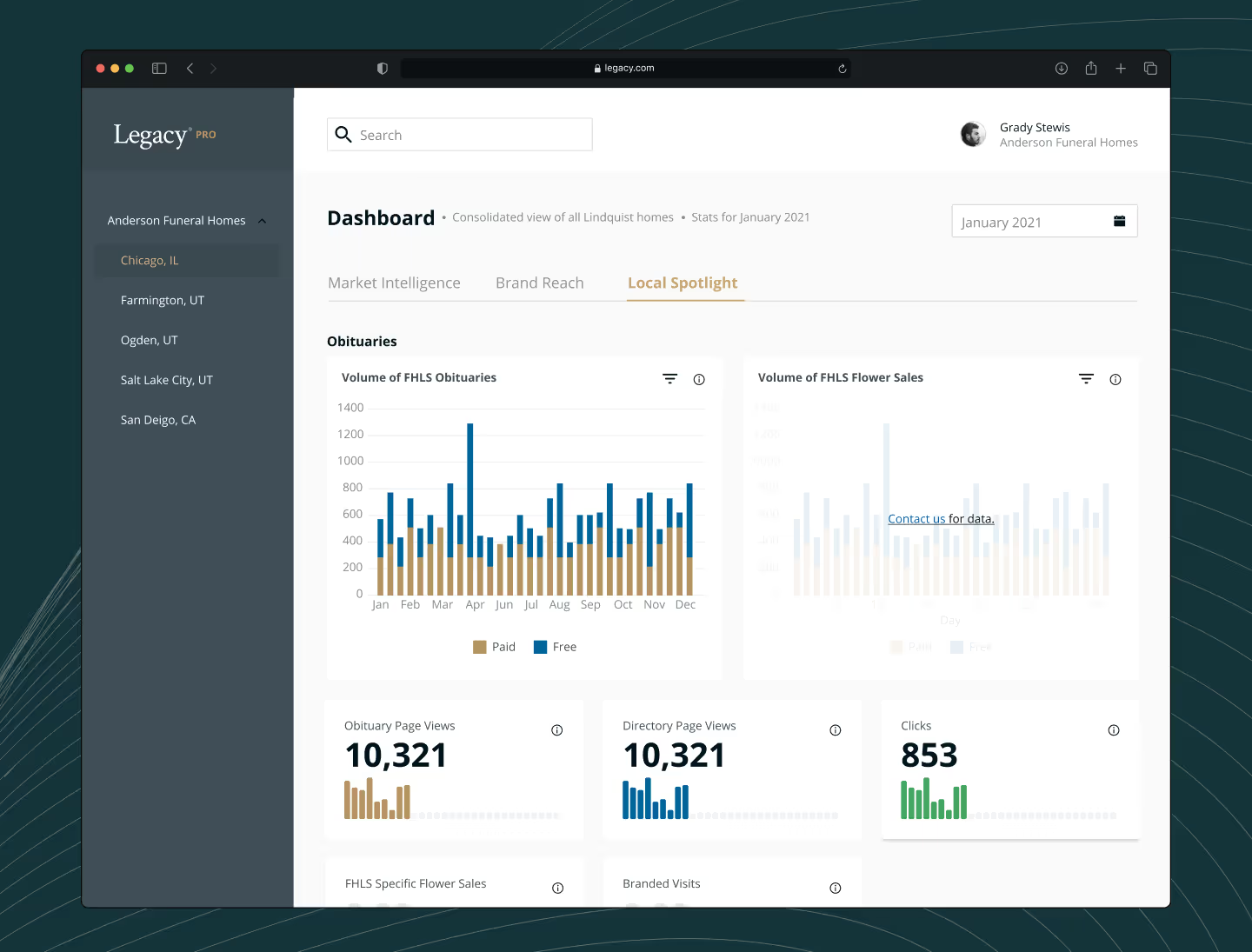
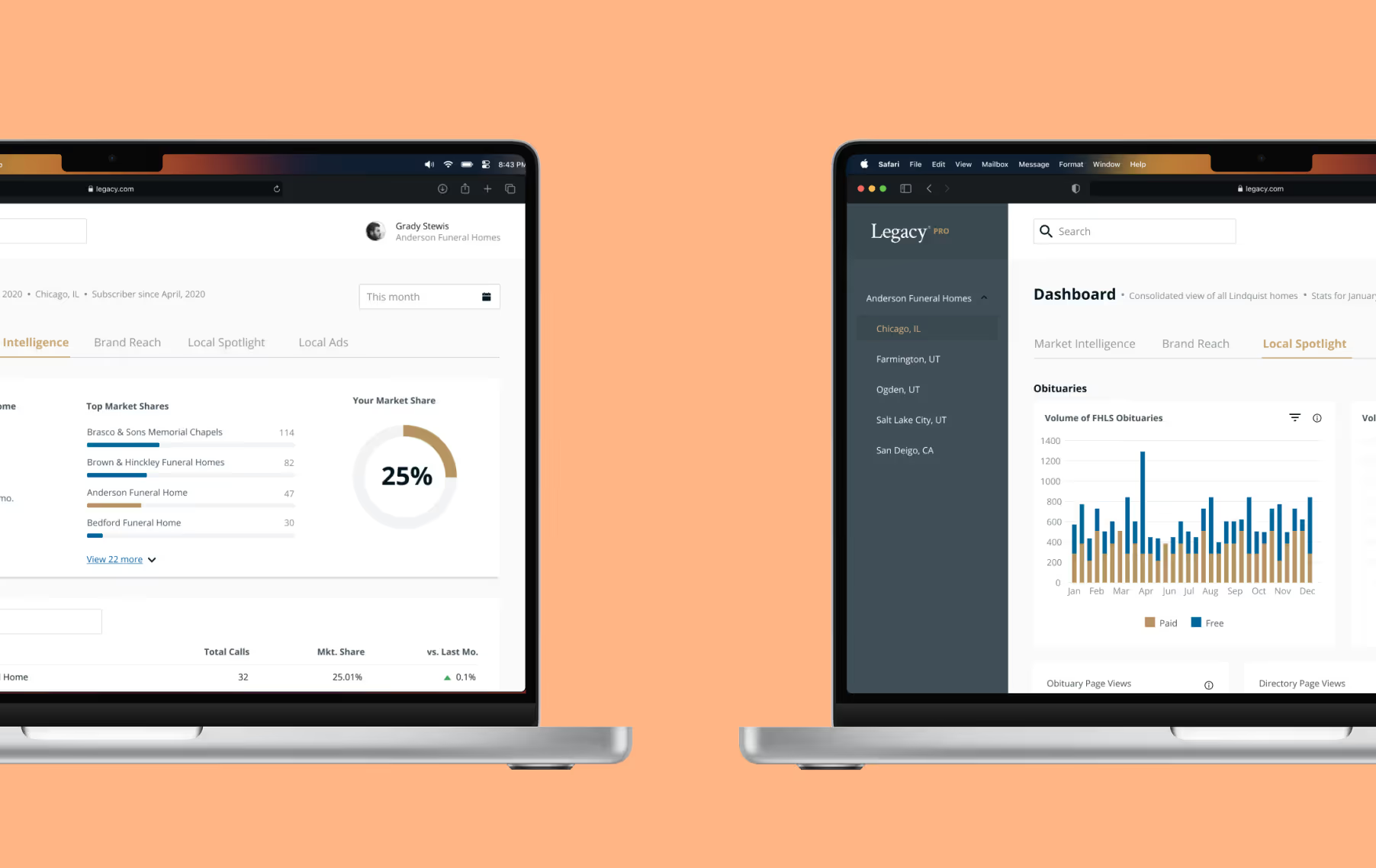
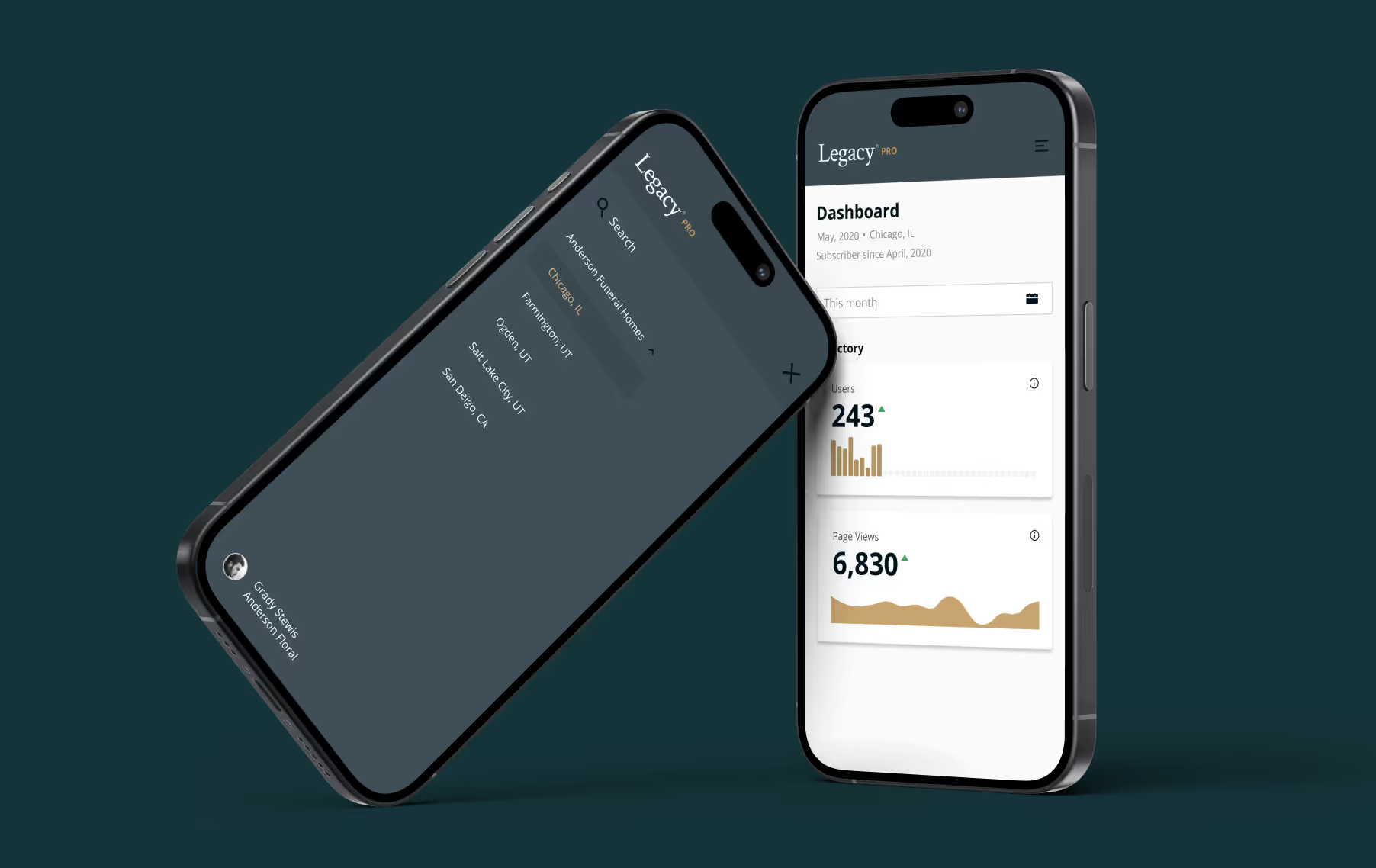
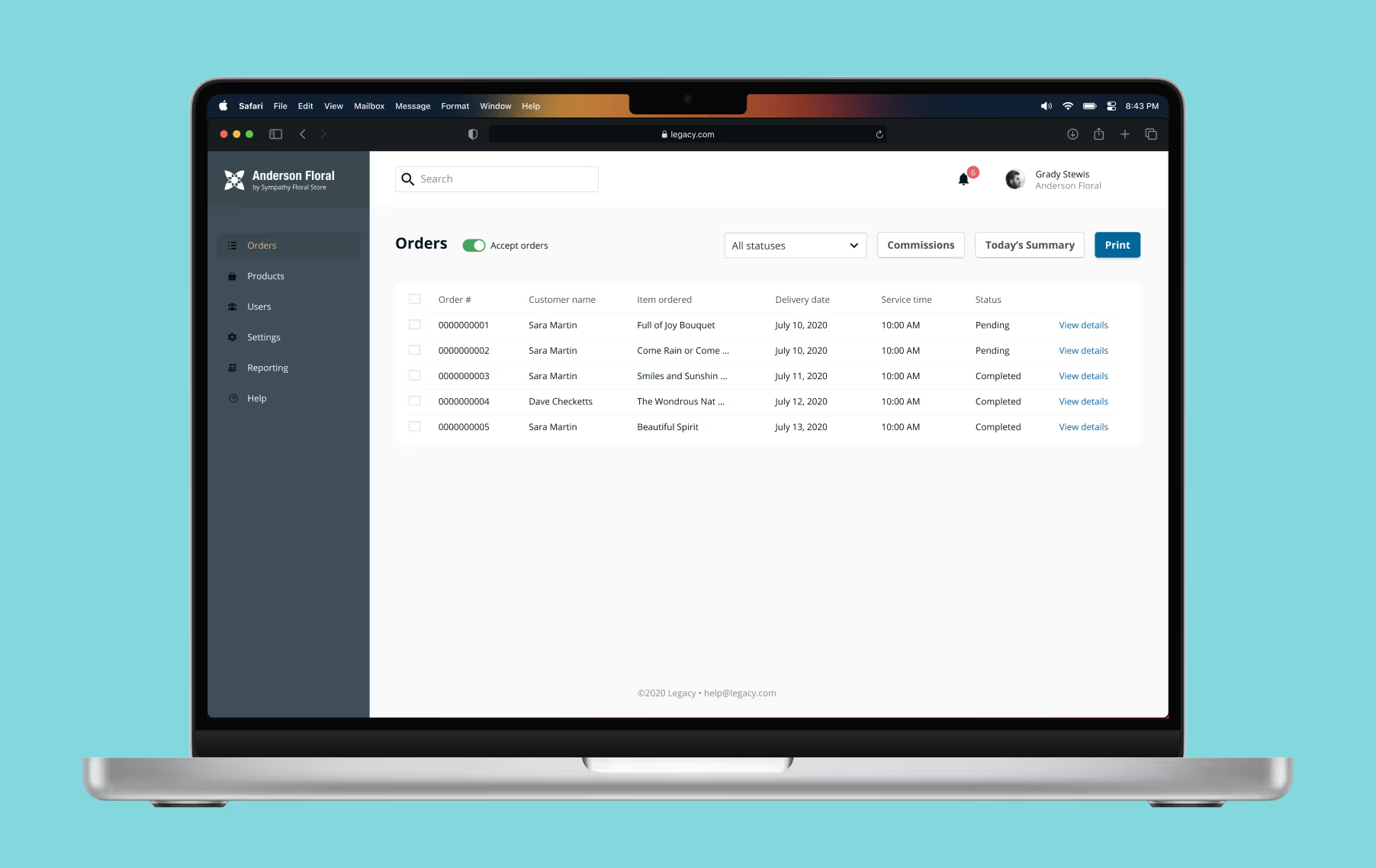
On the back end, funeral homes and vendors get a full admin panel: order management, inventory, delivery tracking, location management, user permissions, and analytics. System admins at Legacy and Tukios can see everything across the network.

The platform launched in December 2020 and added new funeral homes and vendors each week. By September 2022, it had grown to 1,200+ funeral homes and 1,300+ local vendors.
Launched in December 2020, the platform first surpassed $1M in monthly revenue in August 2022 and continues to grow.
The analytics layer gives the Legacy and Tukios teams visibility into conversion at every step, which products move, where orders drop off, how different funeral homes perform. That data drives the weekly iteration that has kept the platform growing since launch.
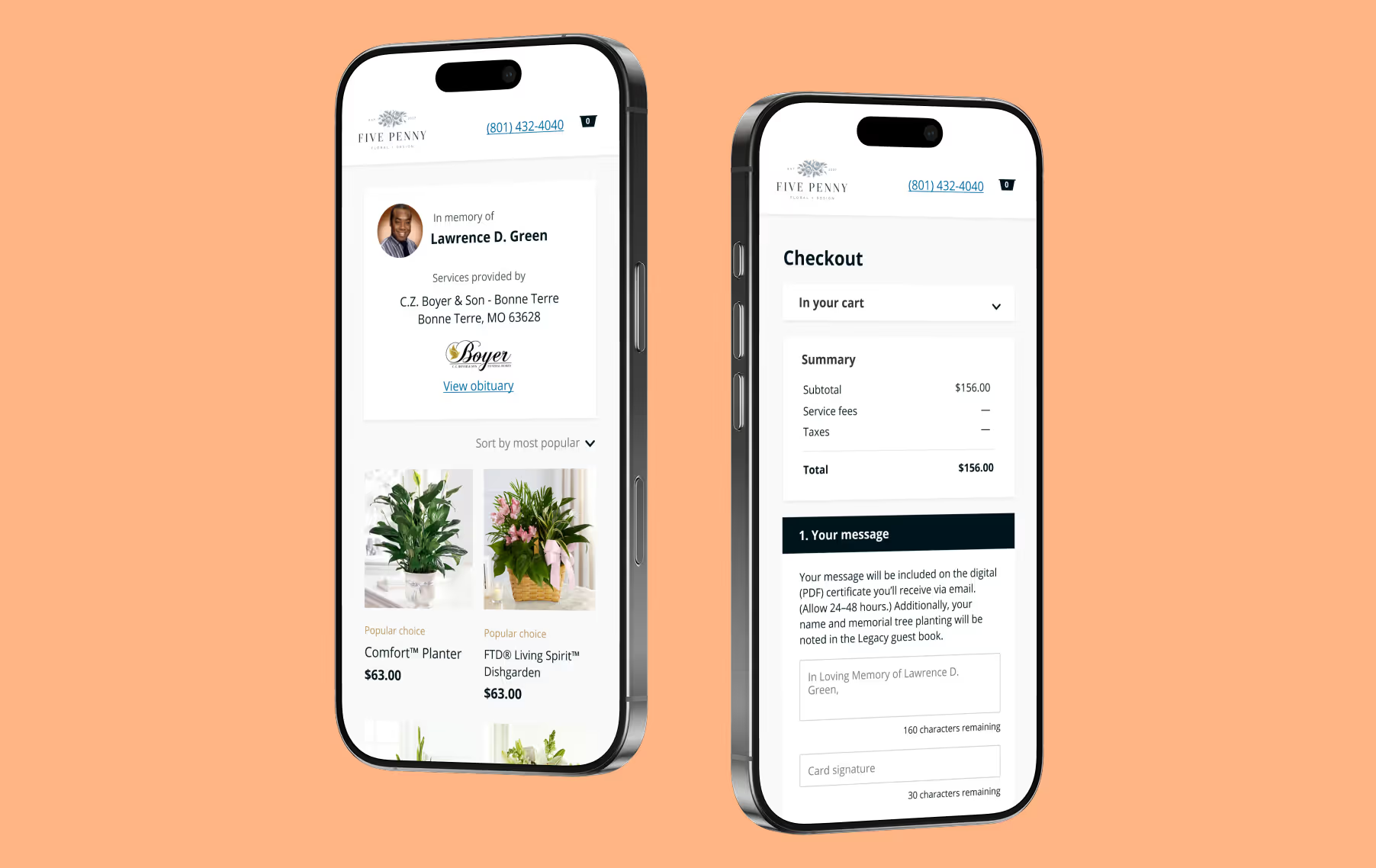
The checkout
Every order on this platform has a deadline that cannot move. A florist has to fill it and a funeral home has to receive it before the service, which happens whether or not the payment cleared.
Checkout runs on Stripe. Each order carries a service fee and a convenience fee calculated at purchase. Guests ordering from a phone can pay with Apple Pay, and cards that ask for the extra verification step go through 3D Secure. Refunds reconcile back against the original charge, so an order cancelled in Stripe is cancelled in the platform too.
Canada came later and brought its own tax rules. The platform ran on TaxJar first and then moved to Stripe Tax, and Canadian florists were onboarded through Stripe Connect so they are paid directly.
From the obituary to the right storefront
Getting a guest from an obituary to the correct shop is its own piece of engineering. The link on the obituary carries an encoded string identifying the person who died and the service being held for them. The storefront decodes it to load that funeral home’s branding and the inventory of vendors near that service, which is what makes the same platform look like a thousand different shops.
Florists are notified by text when an order lands, because a florist is not sitting at a dashboard waiting.
Getting flowers to a service on time
Flowers are not shipped. A person carries them to a place at a time, so the platform holds the rules that make that work: which florist covers which address, and whether that shop is open on the day a guest is asking for. Lead times vary by arrangement, so it holds those too.
Vendors set their own retail and wholesale pricing and manage their own catalogs, photos included, so a florist can update a product without calling anyone. Memorial trees run alongside the flowers with their own certificate, generated for the family to download or have mailed.
Five years of it
The marketplace repository holds 13,337 commits from 17 people and reached its eighth major release. A lot of that is maintenance. A tax rule changes one quarter and a charge ID needs reconciling against a refund the next. Legacy is still running it.