10M
Activated learners on Degreed, whose blog we rebuilt and still run
160+
Countries those Degreed learners are spread across
445,000+
WGU graduates. We built the site for WGU Labs, its innovation arm
1 in 3
Fortune 50 companies use Degreed daily
What we build
Software for the full EdTech product lifecycle
Publishing platforms and blogs built for SEO and for the reader who arrives from search. We rebuilt Degreed's blog inside their existing codebase and content stack, and it had to surface their best writing and turn readers into demo requests.
Websites for EdTech companies at every stage. A Series A investor and a Fortune 500 L&D team both judge the product by the site before they ever see a demo, so it has to look as serious as the product behind it.
Portfolio showcases and research hubs for EdTech accelerators and higher ed innovation arms. We built the WGU Labs site, which carries 28 portfolio companies and a research network that has impacted 180,000+ students.
Learner dashboards, skill pathways, progress tracking, and course interfaces for LMS and workforce learning products. We design for the learner who opens the platform most days and for the admin who checks it before a renewal.
Course apps and certification tracking, designed on the phone first. A lot of studying happens in short gaps between other things, and learner engagement drops fast when the mobile version feels like an afterthought.
Employer reporting, cohort analytics, completion tracking, and skill gap analysis. Your enterprise clients use these to justify the spend at renewal, and your team uses them to grow the account.
Case study
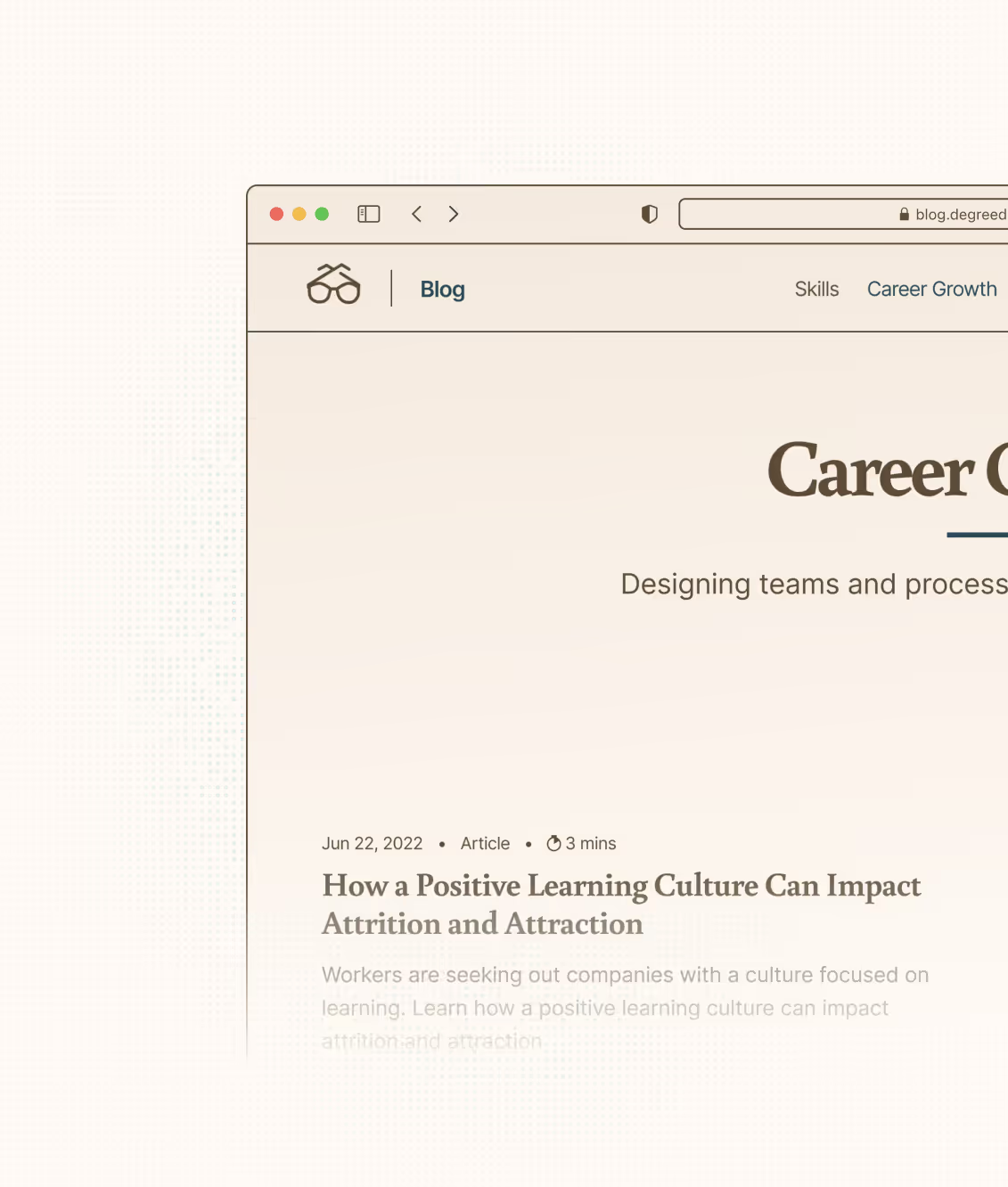
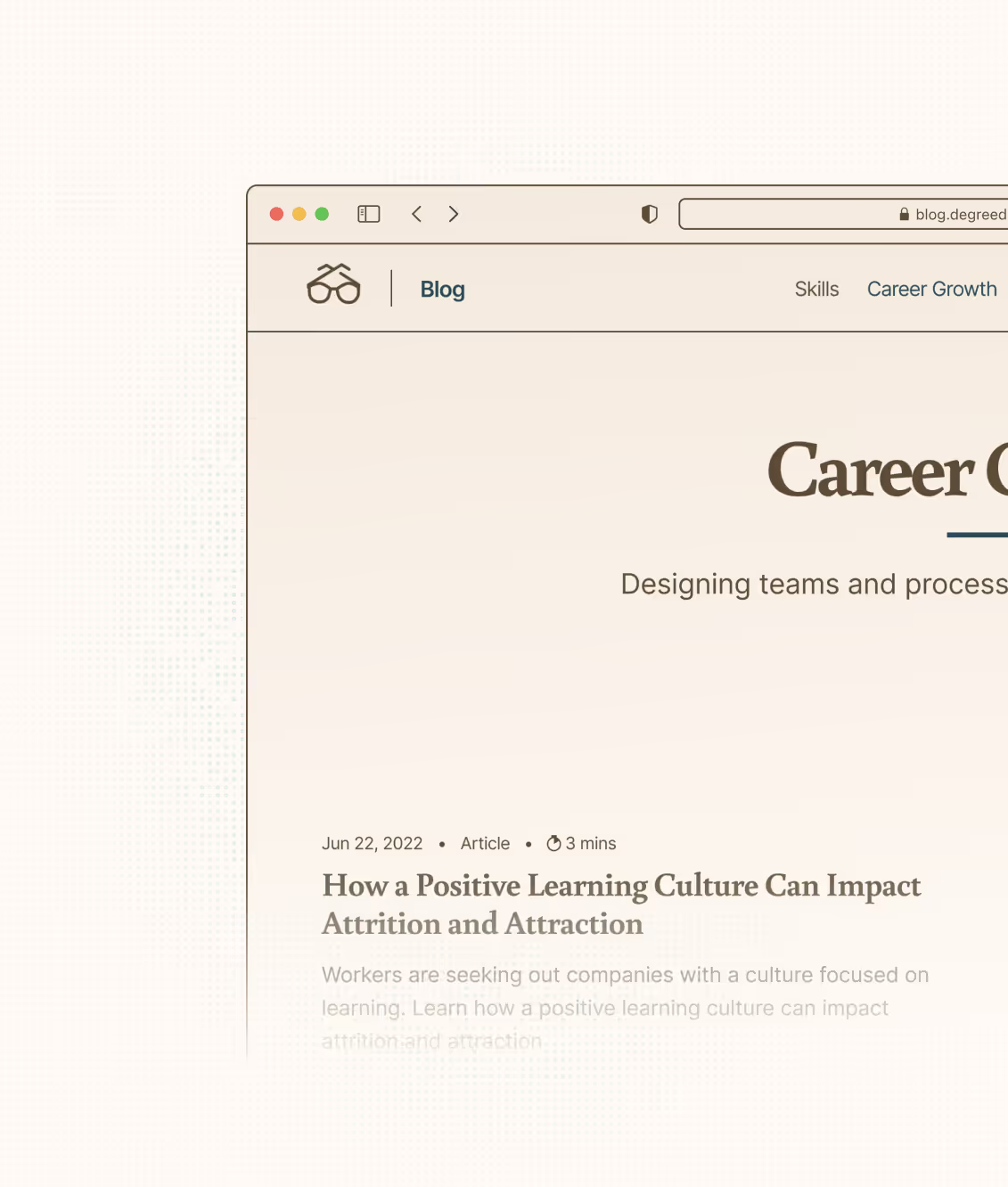
Degreed: the blog for a $1.4B learning platform used by 1 in 3 Fortune 50 companies
Degreed is one of the largest workforce learning platforms in the world, with 10M activated learners across 160+ countries. We redesigned and rebuilt their blog from the ground up, working inside their existing codebase and content stack.
Degreed had just finished a full rebrand, so the blog had to carry the new identity through while doing two jobs at once. It puts their thinking on skills-first learning in front of HR and L&D buyers, and it turns those readers into demo requests.
See the case study
Case study: WGU Labs
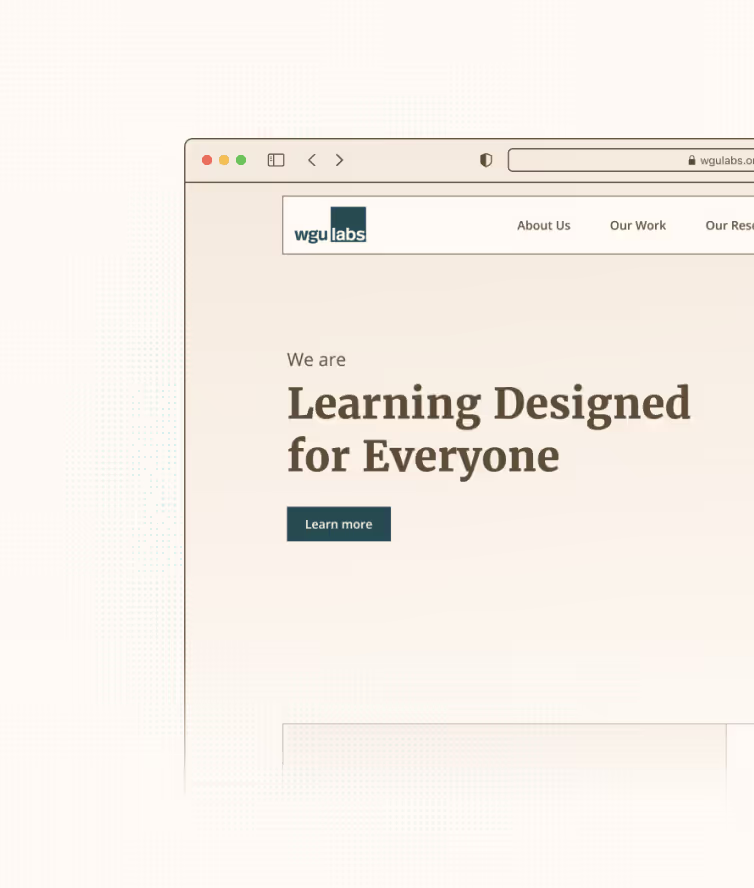
WGU Labs backs 28 EdTech companies. We built the site that tells their story.
WGU Labs is the innovation arm of Western Governors University, a fully online university for working adults with 200,000+ students and 445,000+ graduates. Labs has backed 28 EdTech portfolio companies, and its College Innovation Network has impacted 180,000+ students.
The site leads with their mission and backs it with impact numbers, and every portfolio company and CIN member gets a visible place in it. In 2025 we taught their marketing team Webflow, and they publish their own research briefs now.
See the case studyWhy HQ for EdTech
Consumer UX at enterprise scale
Both sides of the table. Degreed has 10M activated learners. WGU Labs backs early-stage EdTech companies through its accelerator. We've done the work at both ends, and we run the process differently depending on your stage.
Utah's EdTech ecosystem. We built the WGU Labs site and helped Instructure scale the Canvas LMS platform. Both are Utah companies, like us.
SEO starts in the architecture. SEO depends on page structure and crawlability, and we decide both while we design. Both are expensive to fix once a content platform has launched and started publishing.
Long-term product partners. The team that launches your platform stays to maintain it. We've run Degreed's blog since we built it, and WGU Labs has been with us since 2022.
Learner engagement is a design problem
The best EdTech gets out of the way and lets the learning happen. Every slow load or confusing flow is a learner who opened the platform and closed it before finishing the course.
So we design for fewer clicks and the right content on the first screen, and we make coming back tomorrow the easy option.















Our work
RISExp
Messenger & My Designer Lab
Revere Health
Show&Tell
Messenger Memorial Maker
Nomi Health
Legacy
Seis
Water Lantern Festival
VillageFor
Audience
Autoliv
Hey Grill Hey
Identifyd
Wellabe & iPremium
Parallel
WGU Labs
BodyAudit
Degreed
HotMic

“The way you've handled this is such a testament to why HQ is so damn good.”
Elizabeth Waite
CMO, Collegewise

“This team is insanely reliable.”
Randall Bennett

“These are my favorite vendors.”
Hayden Hill
CMO, Christensen Institute

“As a way to get to a phenomenal product, hiring this team is the best way to go. Overall we're 1000% pleased.”
Austen Allred
CEO, GauntletAI

“There's no doubt in my mind that we picked the right partner in HQ to help us with this.”
Shobin Uralil
CMO, Lively

“If I'm not your happiest customer, I'm willing to fight whoever thinks they are for that title.”
Jeff Allen
CEO, BlueCar

“We feel like HQ has been our secret weapon.”
Jeron Paul
CEO, Spiff (acq. by Salesforce)
Hear it from more of our clients
See our wall of loveFrequently asked questions
Yes. Degreed is one of the largest workforce learning platforms in the world, valued at $1.4B with 10M activated learners across 160+ countries. One in three Fortune 50 companies use it daily. We redesigned and rebuilt Degreed's blog from the ground up, working inside their existing codebase and content stack. The platform itself indexes millions of learning resources and connects to 800+ HR and talent integrations, and the blog is where Degreed makes its case on skills-first learning to HR and L&D buyers. It had to surface their strongest content and turn readers into demo requests without reading like a sales page. Before designing anything, we studied how Slack, Dropbox, Wistia and other SaaS companies at Degreed's tier run their blogs. Degreed had also just finished a full rebrand, so we carried the new typography and component style through every template. We've hosted and maintained the blog since. In 2024 their security team asked us to add a header that stops browsers guessing at file types, the kind of small hardening a platform at their scale gets audited on.
Yes. The learner who opens the platform most days and the enterprise admin who pulls reporting before a renewal are looking at the same data with very different questions. The learner wants to know what to do next. The admin wants proof the spend worked. The hard part is making both experiences feel native without shortchanging either one. A strong learner experience with weak reporting makes it hard for the buyer to renew. A clean admin dashboard sitting on a poor learner experience means the platform never gets used enough to produce the data the buyer needs. So we treat them as two products over one set of data. Each is designed around the person who opens it, and we plan the reporting while we design the learner flows, since those flows generate the data in the first place.
Yes. We built the WGU Labs website for the innovation arm of Western Governors University, one of the largest universities in the United States. WGU is fully online and built for working adults, with 200,000+ current students and 445,000+ graduates. WGU Labs has backed 28 EdTech portfolio companies and supported more than 180,000 students through the College Innovation Network. The organization works as a funder, researcher, accelerator, and advocate at once, and the site had to explain all of that to founders and university partners as well as students. Higher ed websites often try to serve every audience at once and end up serving none of them clearly. We set a plain order instead: lead with the mission, back it with impact numbers, then give every portfolio company and CIN member a visible place with context beyond a logo. We built the design system so their team can add companies and publish research without a developer. In 2025 they brought us an updated brand guide, and we worked a second identity through the site with their designer in the Figma file alongside ours.
We plan for SEO in the architecture, before anything is designed. Content platforms get structured for crawlability, clean URL hierarchies, semantic HTML, and fast load times from the first build decision, because those are expensive to retrofit on a site that already publishes a lot. EdTech content has a specific version of this problem. If a blog or resource library that grows every week is slow to crawl or badly organized, it loses organic traffic to competitors writing about the same skills. For Degreed, the blog is where their thinking on skills-first learning reaches HR and L&D buyers, so it had to be easy to find and easy to act on once someone arrived. We rebuilt it inside their existing codebase and content stack, with success stories and demo request calls to action worked into the reading experience instead of stacked on as banners.
Yes. Whether you're closing a Series A or pitching a Fortune 500 L&D team, your website is the first look anyone gets at the product. A site that looks unfinished says the same thing about whatever sits behind it. We build EdTech marketing sites that make your pitch land before anyone gets on a call. Our education work runs from WGU Labs, whose accelerator backs early-stage EdTech companies, to Degreed at a $1.4B valuation. The brief changes more with your stage than with your size. An early-stage company needs the site to explain a product that may still be taking shape. A platform like Degreed needs it to hold up next to the SaaS companies competing for the same buyer's attention, which is why we studied the blogs of companies like Slack and Dropbox before designing theirs.
Building software for EdTech
An EdTech product either earns daily engagement or gets quietly abandoned. We've worked at both ends of the scale, from the blog for a workforce learning platform with 10M activated learners to the site for the innovation arm of a university with 200,000+ students.
Our work with Degreed focused on their blog. Degreed is a $1.4B workforce learning platform that 1 in 3 Fortune 50 companies use daily, and the blog is where they make their case on skills-first learning to HR and L&D buyers. We redesigned and rebuilt it inside their existing codebase and content stack, and we've hosted and maintained it since.
WGU Labs was a different problem. The innovation arm of Western Governors University needed one site to explain its 28 EdTech portfolio companies, its research, and the College Innovation Network's impact on 180,000+ students. We led with the mission, backed it with impact numbers, and gave every portfolio company a visible place in it.
We plan SEO architecture and the learner experience together from the first design decision. Both are expensive to fix once a platform has launched and started publishing.
Building something for learners?
Whether it's a learning app or a marketing site that has to hold up in enterprise deals, tell us what you're building.
Start the conversation